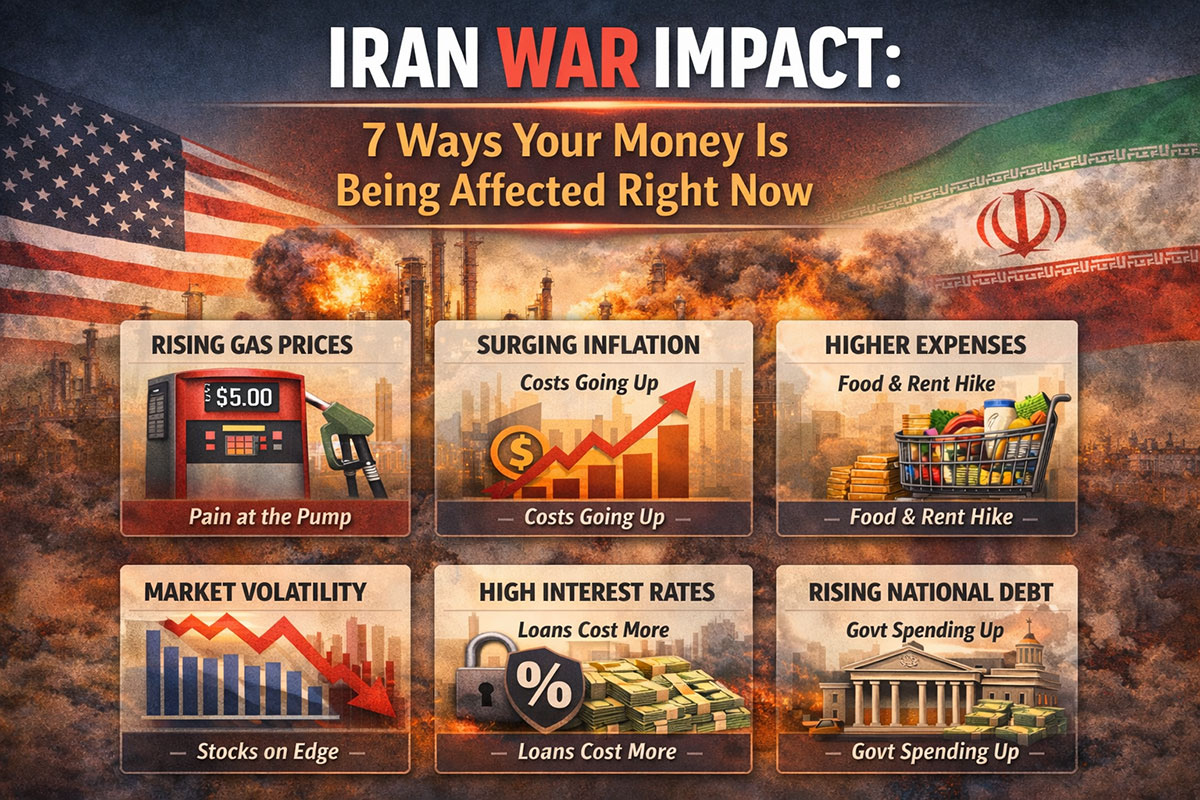
The ongoing Iran conflict is no longer just a geopolitical issue—it’s directly impacting your wallet, investments, and daily expenses in the United States.
From rising gas prices to stock market volatility, Americans are already feeling the financial pressure. Experts warn that this could get worse if the conflict continues.
Let’s break down 7 real ways your money is being affected right now 👇
1. Gas Prices Are Rising Fast
One of the biggest and most immediate impacts is on fuel prices.
- Oil prices have surged above $100 per barrel due to supply disruptions
- The Strait of Hormuz (global oil route) is under threat
- Gas prices in the US have already jumped significantly
👉 Higher gas prices = higher cost of living (transport, delivery, travel)
2. Inflation Is Increasing Again
When oil prices rise, everything becomes more expensive.
- Even a 10% oil increase can push inflation higher in the US
- Food, groceries, flights, and utilities all get costlier
- Inflation could rise by up to 1% or more in coming months
👉 Result: Your money loses value
3. Everyday Expenses Are Going Up
This is where most Americans feel the real pain.
- Grocery prices increase due to higher transport costs
- Shipping & logistics become expensive
- Rent and utilities may also rise
Experts warn that rising fuel costs are already pushing up consumer prices across sectors
👉 Your monthly budget gets tighter
4. Stock Market Volatility Is Increasing
Markets hate uncertainty—and war creates a lot of it.
- Oil shock = market fluctuations
- Investors move money to safer assets
- Short-term volatility spikes
However, historically:
- Markets often recover after war shocks
- Some sectors actually benefit
👉 Smart investors don’t panic—they adjust strategy
5. Interest Rates May Stay High Longer
The Federal Reserve is in a tough position.
- Inflation rising → rates should go up
- Economy slowing → rates should go down
This creates a policy dilemma, meaning:
- Rate cuts may be delayed
- Borrowing stays expensive
👉 Loans, EMIs, and mortgages remain costly
6. Government Spending & Debt Will Increase
War is expensive—and the US government will spend more.
- Defense spending could rise significantly
- This increases national debt
- Bond yields may rise
👉 Long-term effect: higher taxes or inflation pressure
7. Economic Growth May Slow Down
The US economy is strong—but not immune.
- GDP forecast already slightly reduced due to war impact
- Businesses face higher costs
- Consumer spending may decline
👉 Slower growth = fewer opportunities, job pressure
Bonus: Who Benefits From This Situation?
Not everything is negative—some sectors gain:
✅ Energy companies (oil & gas)
✅ Defense stocks
✅ Gold (safe haven)
👉 Smart investors rotate money into these sectors
What You Should Do Now (Action Plan)
If you’re in the US, here’s how to protect your money:
- Reduce unnecessary expenses
- Build an emergency fund (3–6 months)
- Avoid high-interest debt
- Invest in inflation-resistant assets (Gold, Energy ETFs)
- Stay invested—but diversify
Final Thoughts
The Iran war is creating a chain reaction:
👉 Oil ↑ → Inflation ↑ → Expenses ↑ → Growth ↓
While the US economy remains resilient, prolonged conflict could deepen financial pressure on households.
The key is not to panic—but to prepare.