
Elections & Economy
Trump Election Results and Your Money: Taxes, Inflation, Investments & More
By Anil Choudhary · Updated September 26, 2026 · Reviewed September 26, 2026 · 13 min read
Quick Answer
The 2026 midterms land on November 3, with all of the House and a third of the Senate on the ballot. Your tax bill is already set through 2028 regardless of the outcome, since the current tax law was signed back in 2025. What could actually shift is how much gridlock you get in Washington for the next two years, and gridlock itself is a kind of policy: it usually means whatever tax, tariff, and spending rules are already in place stay in place, since new laws need both chambers and a presidential signature to move.
Key Takeaways
- •The 2025 tax law's biggest provisions, the higher SALT cap, and the deductions for tips, overtime, and seniors, run through 2028-2029 no matter who wins in November.
- •The Fed just raised interest rates for the first time since 2023, pushing the 30-year mortgage rate back up near 7% right before the election.
- •Tariffs didn't disappear after the Supreme Court's February ruling, they moved to a new legal foundation and now sit at roughly 10-11% on average.
- •A government funding fight lands just five weeks before Election Day, and a short shutdown wouldn't touch Social Security payments.
- •Divided government has historically meant gridlock rather than sweeping change, since a president can veto whatever a new Congress sends over.
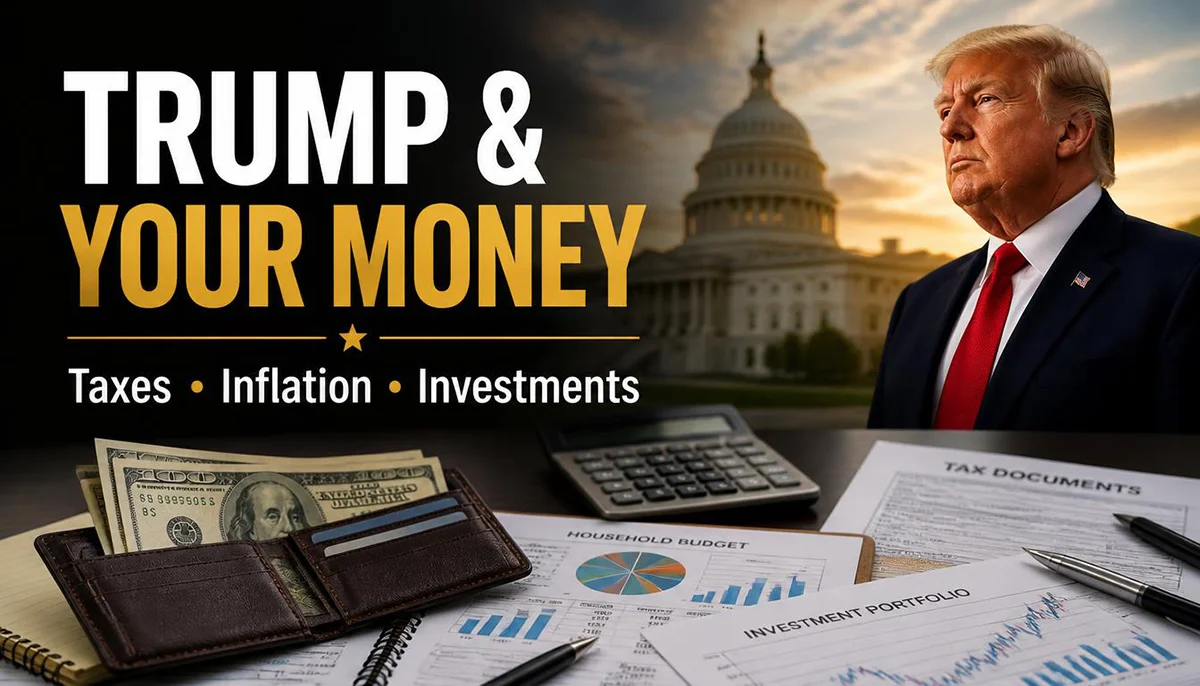
Every election year, the same question shows up in inboxes and group chats: should I be doing something different with my money right now? This year it's a fair question to ask twice, because the 2026 midterms are landing on top of an unusually busy few months for the economy. The Federal Reserve just raised interest rates for the first time since 2023. Tariffs got struck down by the Supreme Court in February, then came right back under a different law. A new tax bill that most people are still getting used to is already showing up in paychecks. And Congress is staring down a government funding deadline just days before voters head to the polls.
None of that is really about who wins on November 3. It's the backdrop the election is happening against. This guide walks through what's already locked in, what's genuinely still up for grabs depending on the results, and what's worth doing with your own money either way.
Where Your Money Actually Stands, Four Weeks Before the Vote
Start with what's already happened, because it's more consequential than most of what could happen next.
On September 16, 2026, the Federal Reserve raised its benchmark interest rate a quarter point, to a range of 3.75% to 4.00%. It was the first rate hike since 2023, and it caught plenty of people off guard, since the Fed had spent most of the last two years cutting or holding steady. The vote was unanimous, 12-0, a reversal from a much closer 9-3 vote to hold just six weeks earlier. What changed in between was the data: inflation running close to 3.5% year-over-year, well above the Fed's 2% target, with energy and shelter costs doing a lot of the damage.
The practical effect showed up almost immediately in mortgage rates. The 30-year fixed rate climbed to 6.95% by mid-September, its highest level since early 2025 and a full six-tenths of a point higher than it was a year earlier. If you're house-hunting or thinking about refinancing, that single Fed decision probably matters more to your monthly payment than anything on the ballot next month.
Layer a possible government shutdown on top of that. Government funding runs out at midnight on September 30, and as of late September, Congress hadn't agreed on a short-term bill to keep agencies open. The sticking point is familiar: Democrats want an extension of enhanced Affordable Care Act premium subsidies attached to any funding deal, and Republican leaders have been resistant. A shutdown wouldn't touch Social Security checks, which are funded outside the annual appropriations process, but it would delay pay for federal workers and some contractors, and it would add one more layer of noise to an already loud few weeks in Washington.
The unusual part: this isn't the typical midterm setup
Most midterm years arrive with the Fed either cutting rates or sitting still, trying to stay out of the political spotlight. This year it's doing the opposite, raising rates because the inflation numbers left it little choice. That matters for how you read everything else in this guide: a lot of what's squeezing household budgets right now, borrowing costs, some import prices, isn't really about the election outcome at all. It's about a central bank fighting inflation that hasn't fully cooled off.
The Tax Law That's Already Changed Your Paycheck
Here's something worth clearing up before anyone tells you a midterm result is going to change your taxes: it isn't, at least not soon. The tax law shaping your 2025 and 2026 returns was signed back in the summer of 2025, and its major individual provisions run through 2028 or 2029. Congress would have to write, pass, and get a president to sign brand new legislation to touch any of it before then, and that's true no matter how November goes.
A few pieces of that law are worth knowing if you haven't checked your withholding lately:
| Provision | What it does | Runs through |
|---|---|---|
| SALT deduction cap | Raised from $10,000 to $40,000, phasing down above $500,000 in income | 2029 |
| No tax on tips | Deduction of up to $25,000 in qualified tip income | 2028 |
| No tax on overtime | Deduction of up to $12,500 single / $25,000 joint on overtime's extra half-time pay | 2028 |
| Senior deduction | Extra $6,000 deduction per person 65 and older, phasing out above $75,000/$150,000 income | 2028 |
| Auto loan interest | Deduction up to $10,000 on interest for qualifying U.S.-assembled vehicles | 2028 |
| Standard deduction & brackets | 2017 tax rates and a higher, inflation-adjusted standard deduction | Permanent |
Two things trip people up here. First, the tips and overtime provisions are deductions, not exemptions: you still pay Social Security and Medicare payroll tax on that income, and you still need to itemize or claim the deduction correctly when you file. Second, both phase out at fairly modest income levels, so a lot of higher earners in tipped or overtime-heavy roles won't see the full benefit.
If you haven't updated your W-4 since these took effect, it's worth a look. Workers who are eligible for the tips or overtime deduction and haven't adjusted their withholding may be having too much held out of every paycheck, money you won't see again until you file next spring.
A Real Example
A server in Ohio who earns $28,000 in reported tips a year can deduct the full amount up to the $25,000 cap on her federal return, roughly $3,000 of tips would still count as taxable income. At a 12% marginal rate, that's about a $2,640 reduction in her federal tax bill compared with the old rules, before touching payroll taxes at all. Multiply that kind of gap across a household with two tipped or overtime-heavy earners, and the numbers get meaningful fast.
Calculator: Tip & Overtime Deduction Savings
Rough out how much the new deduction is actually worth to you, based on how much qualifying income you earn and your marginal tax bracket.
Deductible amount
$18,000
Estimated federal tax savings
$2,160
Estimate only. Ignores income phase-outs, payroll (FICA) tax, and state tax. Confirm your own numbers with a tax preparer.
Tariffs: What's Left Standing, and What a New Congress Could Do
Tariffs have had a stranger year than almost anything else in this guide, so it's worth walking through the timeline before getting to what could change.
In February 2026, the Supreme Court ruled 6-3 that the president's broad tariffs, imposed under a national-emergency law called IEEPA, weren't legal in the first place. The Court's reasoning was straightforward: the power to tax, including tariffs, belongs to Congress under the Constitution, and a law about regulating imports during emergencies doesn't automatically hand the president that taxing power too. It was a significant ruling, and it did trigger billions of dollars in refunds to importers who had paid the invalidated duties.
It didn't end tariffs, though. Within hours, the administration imposed a temporary 10% global tariff under a different law, Section 122 of the Trade Act of 1974, which caps that kind of action at 150 days. That clock ran out on July 24, 2026, and the same day, a new set of tariffs took effect under yet another law, Section 301, this time justified on forced-labor enforcement grounds rather than an emergency declaration. Those Section 301 tariffs, generally 10% to 12.5%, apply to imports from roughly 60 countries and cover close to 99% of everything the U.S. imports. Separately, Section 232 tariffs on steel, aluminum, and autos, in the 25% to 50% range, were never affected by the Supreme Court ruling at all and remain in place.
Add it all up, and the trade-weighted average U.S. tariff rate sits around 10% to 11% as of this fall, the highest sustained level in roughly eighty years, even after accounting for the February ruling. Unlike the temporary Section 122 tariff, the current Section 301 tariffs don't carry a built-in expiration date, though they're already facing legal challenges of their own.
Could a new Congress actually undo this?
Only partially, and not quickly. Tariffs imposed through executive action under statutes like Section 301 and Section 232 don't automatically expire when control of Congress changes hands. Undoing them would require either the executive branch reversing course on its own, a court ruling striking them down the way it did with the IEEPA tariffs, or new legislation that the president would still have to sign. A House that flips to a different party gains oversight tools, hearings, subpoenas, the ability to slow-walk certain funding, but not the unilateral power to cancel an existing tariff schedule. That's a structural point that applies regardless of which party is asking the question.
Calculator: What a Tariff Actually Adds to a Purchase
Tariffs are paid by the importer, not charged directly to you at checkout, but the cost usually gets passed along in the sticker price. Here's a rough sense of what that looks like on an item you're pricing out.
Tariff owed by importer
$62.50
Likely added to the retail price
$37.50
A simplified model. Real pass-through varies widely by product, competition, and exemptions.
What's Actually on the Ballot November 3
Every House seat is up, along with roughly a third of the Senate and several governorships. Polling averages heading into the fall, including the widely tracked generic congressional ballot, have shown Democrats with a mid-to-high single-digit lead in the race for the House, a gap that's held fairly steady through late summer and early September. It's worth saying plainly that polling isn't an outcome. The generic ballot has been directionally useful in past cycles but has also missed by several points before, and turnout in a midterm is always harder to predict than in a presidential year.
What's more useful than trying to predict the winner is understanding what each realistic outcome would actually mean for policy, since that's the part that eventually reaches your wallet.
If Republicans keep unified control of Congress
The clearest path to more change would be unified control, since it removes the need for compromise across chambers or parties. Republicans have talked about making some of the current tax law's temporary provisions, the tips, overtime, and senior deductions, permanent before their scheduled 2028 expiration, along with continuing the current approach to tariffs and trade enforcement. Unified control doesn't guarantee any of that passes; intraparty disagreements over spending and deficits have slowed Republican priorities before, even with control of both chambers.
If Democrats retake the House
A Democratic House would create divided government, since Republicans currently hold the Senate and White House. Democrats have pointed to extending the enhanced ACA premium subsidies at the center of the current shutdown standoff, more oversight of tariff policy and executive spending decisions, and resistance to making the temporary tax provisions permanent. In divided government, the House gains real leverage over spending bills and investigations, but passing new law still requires Senate cooperation and a presidential signature, which is why most divided-government periods produce more gridlock than sweeping change.
The honest bottom line
Either way, nothing changes on November 4. New Congress members aren't sworn in until January, and any legislation still needs to work through committees, floor votes, and a presidential signature or a veto override that takes two-thirds of both chambers, a bar that's been cleared only a handful of times in modern history. If you're waiting to see policy shift before making a financial decision, you're likely waiting until well into 2027 at the earliest.
A Real Example
A couple in Pennsylvania, both government contractors, spent October worried about two different things at once: whether a shutdown would delay their next paycheck, and whether the midterms would change their tax situation. The shutdown risk was the one actually worth planning for, they built a one-month cash buffer to cover a possible pay delay. The election-driven tax worry turned out to be premature; nothing in their withholding or deductions was going to move regardless of the outcome, since that law was already set through 2028.
What History Says About the Stock Market After a Midterm
One pattern shows up often enough in market history that it's worth knowing, with a caveat attached. Looking back across midterm cycles since World War II, the 12 months following a midterm election have been positive for the S&P 500 far more often than not, and this holds regardless of which party wins or gains seats. The usual explanation is that markets dislike uncertainty more than they dislike any particular outcome, so simply removing the "what happens in November" question tends to be worth something on its own, independent of the result.
That pattern is a reasonable data point, not a promise. This cycle has a wrinkle most recent midterm years didn't: a Federal Reserve that just resumed hiking rates rather than cutting or holding, in response to inflation that hasn't fully cooled. Higher borrowing costs are a headwind for stocks and the economy generally, and that dynamic will keep playing out whether the November outcome is a red wave, a blue wave, or something closer to the status quo. Treat the historical pattern as background context, not a reason to change your portfolio around a prediction.
Practical Money Moves Worth Making Either Way
Check your withholding if you earn tips or overtime
If the tips or overtime deduction applies to you and your W-4 hasn't been updated since it took effect, you may be over-withholding every pay period. A quick paycheck checkup, either through the IRS withholding estimator or with a tax preparer, can put money back in your pocket now instead of waiting for a refund next spring.
Build a small buffer if a shutdown could affect your paycheck
Federal employees, active-duty military, and contractors on federal work are the ones most directly exposed to a funding lapse. Even a short shutdown typically means delayed, not cancelled, pay, but a delay still needs to be covered. If that describes your household, a one-month cash cushion is a reasonable, low-drama hedge.
Time a refinance around the rate, not the election
Mortgage rates near 7% are a function of the Fed's recent hike and where inflation sits, not of who wins in November. If you're weighing a refinance, run the numbers against today's rate rather than waiting on a political outcome that likely won't move rates directly anyway.
Watch for tariff-exposed purchases
Electronics, furniture, appliances, and vehicles with significant imported content are the categories most likely to carry tariff costs in the sticker price. If you're planning a big purchase in one of those categories, price-check now rather than assuming a rate change is coming, since the current Section 301 tariffs have no scheduled expiration date.
Mark your calendar for the Social Security COLA
If you or a family member receives Social Security, the official 2027 cost-of-living adjustment is set to be announced October 14, 2026, after the midterms. Independent estimates currently put it around 3.6%, up from 2.8% in 2026, though the final number depends on September inflation data not yet released at the time of writing.
Resist the urge to trade the election
It's tempting to shift a portfolio based on which party you expect to win, but that requires two correct guesses in a row: the outcome, and how markets will actually react to it, which often surprises even seasoned analysts. A plan built around your own timeline and risk tolerance has a much better track record than one built around a prediction.
This article is for general information and isn't personalized tax, legal, or investment advice. Tax law provisions, tariff rates, interest rates, and legislative timelines can and do change; confirm current details with the IRS, a licensed tax preparer, or a financial advisor before making decisions based on anything above.
Editorial Policy
This article is reviewed for factual accuracy and updated using publicly available data from the Federal Reserve, the Bureau of Labor Statistics, Freddie Mac, the IRS, and the Office of the U.S. Trade Representative. Figures on interest rates, tariffs, and legislation move quickly and are current as of the review date below.
Last reviewed: September 26, 2026 · Next scheduled review: November 2026