
Salary & HR
Is Overtime Taxed More Than Regular Pay?
By Anil Choudhary · Updated August 2026 · 7 min read
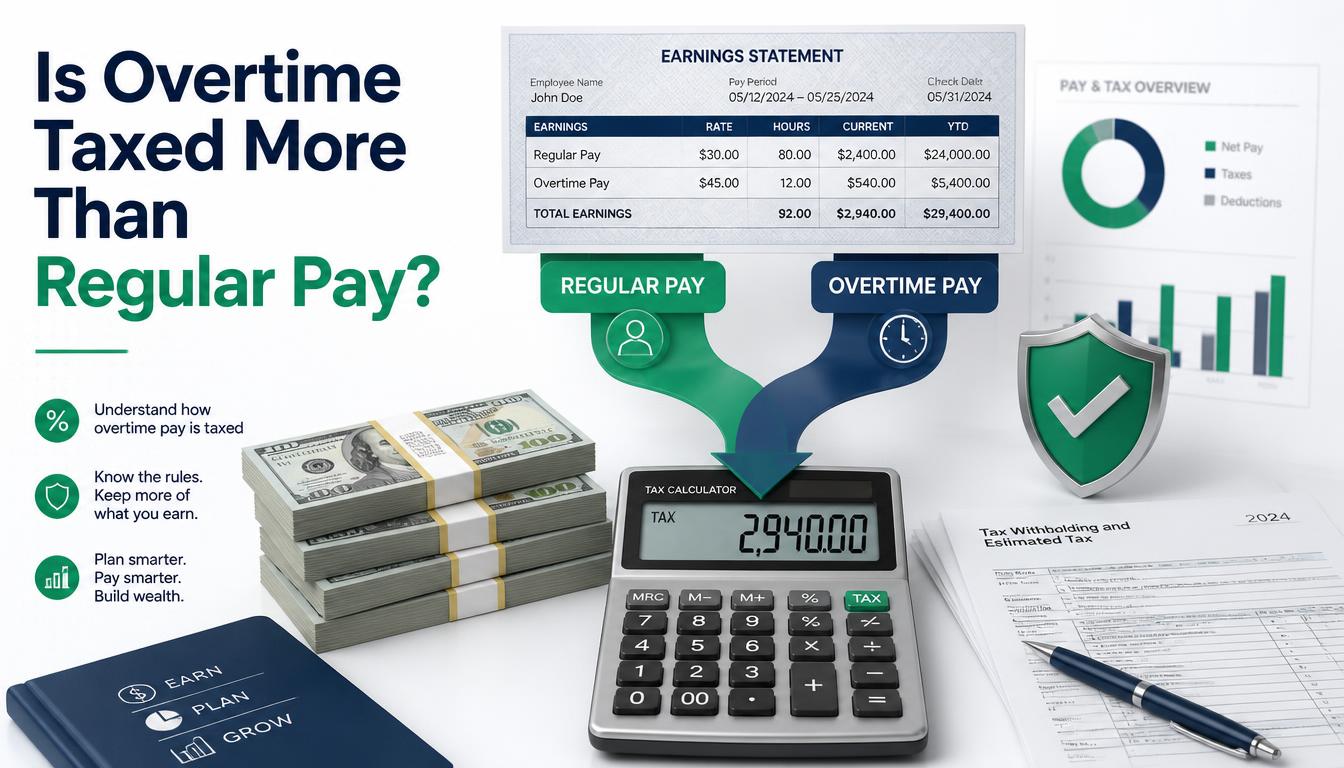
You put in a rough week, worked a bunch of overtime, and then your paycheck arrives looking oddly deflated for how many extra hours you logged. It's a common enough experience that it's spawned a genuine myth: that overtime gets taxed at some higher, punitive rate. It doesn't. What's actually happening is a little more mundane, and once you see it, the confusion mostly clears up.
Does the IRS Have a Special Overtime Tax Rate?
No. This is worth stating plainly because it's the root of most of the confusion: there's no line in the tax code that singles out overtime pay for a higher rate. Overtime is just wages. It gets added to your other earnings for the year and taxed as ordinary income, under the same brackets that apply to every other dollar you earn.
So Why Does an Overtime Paycheck Sometimes Look More Heavily Taxed?
This is a withholding issue, not a tax-rate issue, and the distinction matters. When your overtime pay (or any bonus, commission, or other "supplemental wage") pushes a single paycheck unusually high, employers are allowed to withhold on that supplemental amount using a flat percentage method, separate from how your regular wages are withheld. That flat rate is often higher than what your regular paycheck's withholding works out to per dollar, which is exactly why an overtime-heavy check can look like a bigger chunk vanished. It's a bigger slice taken out now — not a bigger tax bill overall.
Withholding vs. What You Actually Owe
Withholding is really just your employer's best guess at what you'll owe for the year, collected in advance so you're not stuck with one massive bill in April. It's not the final word. Whatever gets over-withheld on a heavy overtime week gets reconciled when you file — either as a larger refund, or in the form of a smaller amount owed, depending on your overall situation. The number on the overtime-week pay stub is not your true tax rate on that money; it's just an advance estimate.
Does Overtime Push You Into a Higher Bracket?
It can, but this is where the "marginal" part of marginal tax brackets does a lot of quietly important work. U.S. federal income tax brackets only apply a higher rate to the income that falls within that higher bracket — not to your entire income once you cross the line. So if a chunk of overtime pay pushes part of your annual earnings into the next bracket up, only that specific slice gets taxed at the higher rate. Everything below the threshold keeps being taxed exactly the way it was before.
A Simple Illustration
Say your regular wages for the year land you comfortably within one bracket. Now add a stretch of overtime that tips your total income $2,000 over into the next bracket up. Only that $2,000 gets taxed at the higher marginal rate — the rest of your income is untouched by the bracket change. Your effective (overall) tax rate ticks up only slightly, nowhere near the jump some people picture when they hear "pushed into a higher bracket."
Payroll Taxes: Social Security and Medicare
Overtime pay is subject to the same payroll taxes as your regular wages — Social Security and Medicare — with no special carve-out. Social Security tax applies up to the annual wage base limit, and Medicare tax applies to all wages, with an additional Medicare tax kicking in above a certain high income threshold for some earners. None of this is overtime-specific; it's simply how payroll tax already works on every dollar you're paid.
State and Local Taxes on Overtime
Same principle applies at the state and local level in states that tax wage income — overtime is ordinary wages, taxed under whatever state and local rules already apply to your paycheck. A few states have no income tax at all, in which case this section is moot for you; everywhere else, overtime doesn't get singled out for different treatment.
Does More Overtime Ever Mean Less Take-Home Pay?
Under the standard federal income tax structure, no — working more and earning more never reduces your overall after-tax income, because of exactly the marginal-bracket mechanics described above. The one real exception isn't about tax brackets at all: certain income-based benefits, subsidies, or tax credits phase out above specific income thresholds, and in rare cases the loss of that benefit can offset (or in unusual cases outweigh) the extra income from a raise in gross pay. That's a benefit-cliff issue, not a tax-bracket issue, and it's worth knowing the difference if you're close to one of those thresholds.
Reading Overtime on Your Pay Stub
Most pay stubs break out regular pay and overtime pay as separate line items, often with hours and rate shown for each, followed by deductions (federal tax, state tax if applicable, Social Security, Medicare, and any benefits) applied to the combined gross. If your overtime withholding looks unusually high on a specific check, checking whether your employer applies the flat supplemental-wage method to overtime is a reasonable first question for payroll, rather than assuming something's gone wrong.
Common Overtime Tax Myths
The big one is already covered — there's no special overtime tax rate. A close second is the belief that earning overtime can shrink your paycheck once you cross into a new bracket; it can't, thanks to how marginal rates work. And a smaller but persistent myth is that overtime taxes "even out" automatically during the year without any need to check your withholding — for people who regularly work heavy, irregular overtime, it's genuinely worth reviewing withholding periodically to avoid a larger-than-expected bill or an interest-free loan to the government via an oversized refund.
Estimate Your Overtime Pay First
Before worrying about the tax side, it helps to know your actual gross overtime pay. Our Overtime Pay Calculator breaks out regular pay and overtime pay separately, so you can see the real gross figures your withholding is being calculated against. For the mechanics of how the overtime amount itself is calculated, see How Is Overtime Pay Calculated in the USA?
This article is for general information and isn't tax advice. Tax situations vary by individual — for anything specific to your finances, consult a qualified tax professional.